

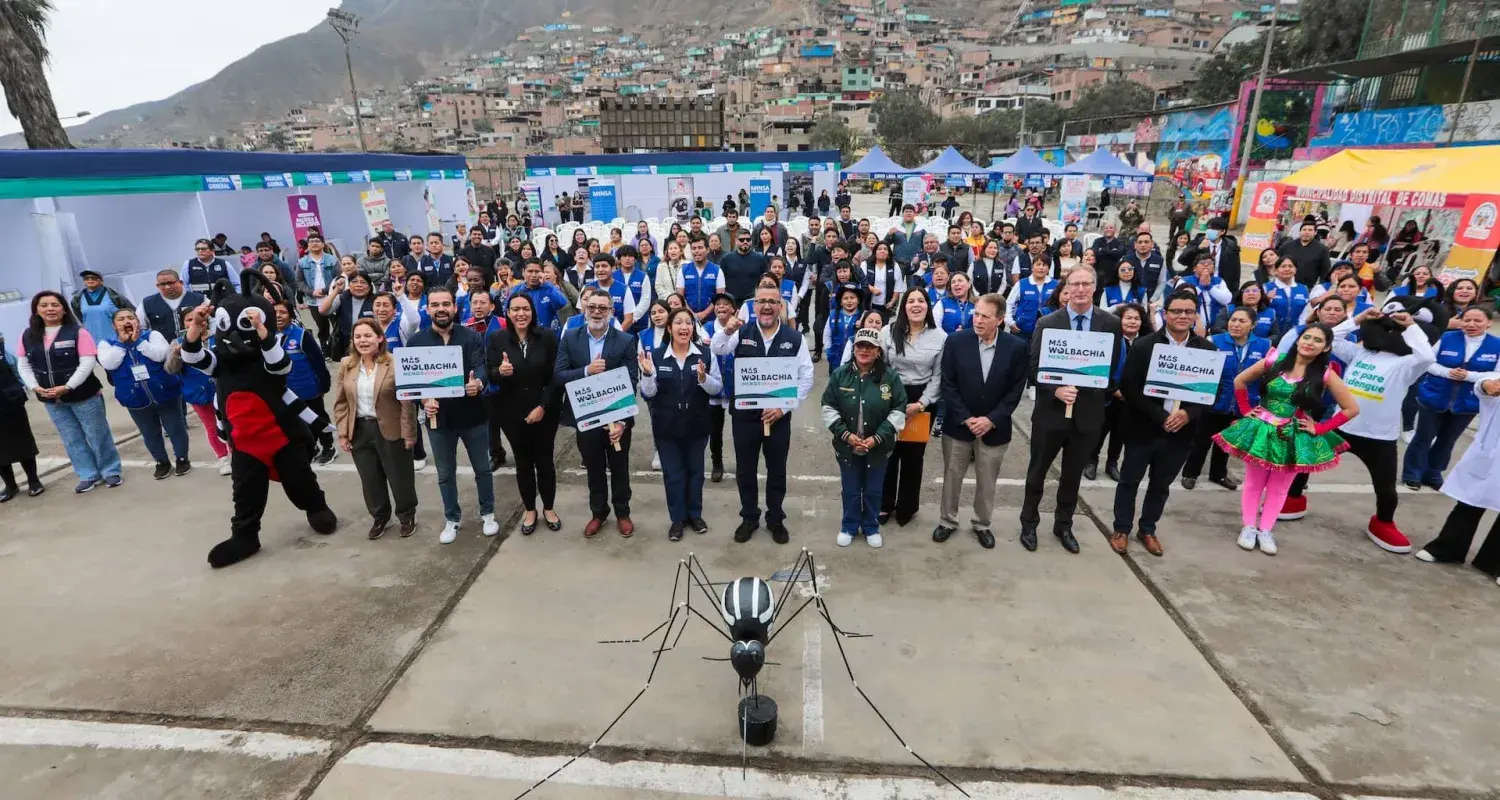
Comas, on the northern edge of Lima, is home to a new approach to dengue prevention. Peru's Ministry of Health leads the programme, working with the World Mosquito Program, the Puerto Rico Science, Technology and Research Trust and the US Centers for Disease Control and Prevention. Community delegates are helping neighbours understand the World Mosquito Program's Wolbachia method and why it matters. The partnership is building the technical skills, systems and local leadership Peru needs to run the programme itself. Success will be measured in families who no longer fear a disease that has affected the country for decades.
Living with dengue in Comas
In the bustling district of Comas, nestled in the foothills of the Andes on the northern edge of Lima, a new approach to fighting dengue is taking shape.
For many families, mosquito-borne diseases such as dengue are a part of everyday life in this densely populated community. Peru recorded more than 271,500 dengue cases in 2024 and a further 39,000 last year, according to the World Health Organisation (WHO), as the country continued to grapple with one of its most persistent public health challenges.
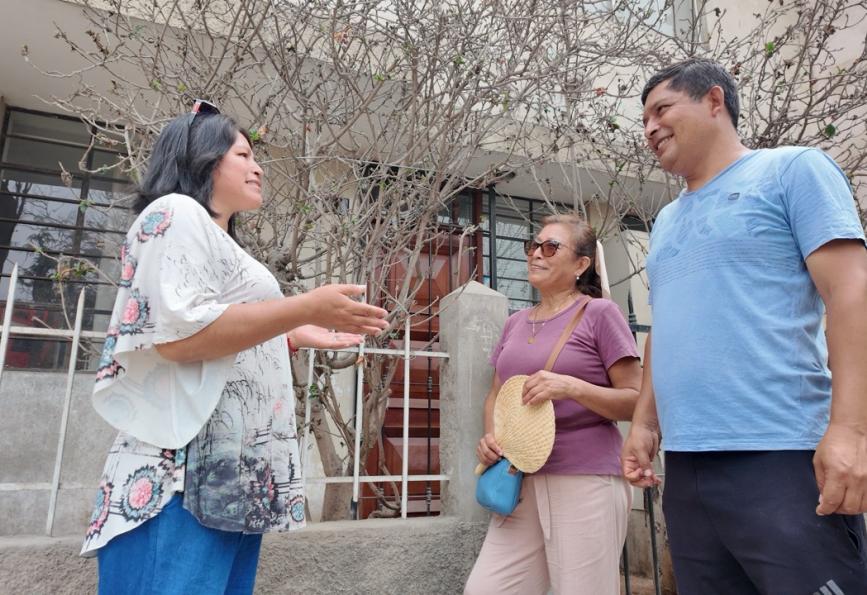
"I started feeling headaches, pain behind my eyes, and fever," recalls Alicia Lurdes Bravo Yupanqui, a community delegate and law student at Universidad César Vallejo who lives in Zone 6. "It was a strong body pain. You don't want to eat anything, you feel nauseous... those days felt endless."
Recovering from dengue changed the way Alicia saw her community. Today, she draws on her own experience to help neighbours understand both the threat of the disease and the recent introduction of Wolbachia mosquitoes in Comas.
"What motivates me the most is caring about the common good of our community and seeing positive changes in my country," she says.
A programme led by Peru's Ministry of Health
But the work underway in Comas is about more than responding to dengue outbreaks. It is also about ensuring Peru can one day lead every aspect of the Wolbachia method independently.
Formed in 2025, the partnership is building the systems, technical expertise and local leadership needed to deliver the World Mosquito Program's (WMP) Wolbachia method, with the long-term goal of creating an installed, sovereign and self-sustaining capacity within the Peruvian State.
Led by Peru's Ministry of Health (MINSA), the programme brings together the Puerto Rico Science, Technology and Research Trust (PRVCU), the US Centers for Disease Control and Prevention (CDC), technical experts from WMP, and a range of national health organisations. Together, they are working to strengthen Peru's capacity to prevent dengue through locally led, sustainable public health innovation.
Earning trust, one conversation at a time
Through patient conversations in parks and community kitchens, Alicia has helped turn curiosity and doubt into the trust on which every successful public health programme depends.
"Sometimes people hear dengue and think it's nothing," she explains. "But it can leave you very sick, or even kill you."
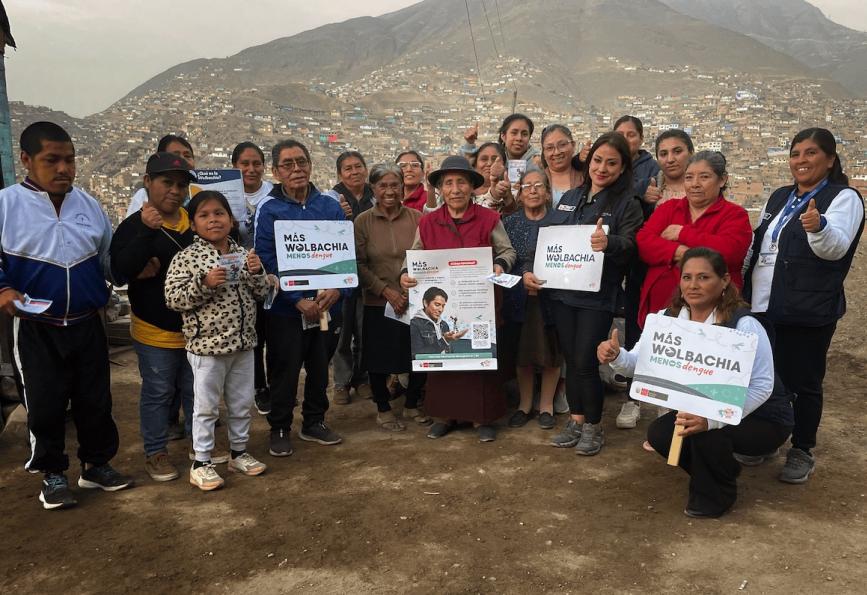
In the desert hills of neighbouring Zone 4, Carmen Luz Estrella Paz has taken on a similar role.
Drawing on a painful family experience with dengue, she has made disease prevention a personal mission, answering questions, dispelling rumours and helping residents embrace a method she believes will save lives.
Several years ago, her nephew became seriously ill with severe dengue. At the time, cases were only beginning to appear in Lima and information about the disease was limited. As his condition worsened, he was admitted to hospital. Carmen still remembers the fear her family felt, convinced that if treatment had come any later, the outcome could have been very different.
"We cannot ignore it," she says. "The mosquito doesn't waste any time. It finds the perfect place to lay its eggs."
Today, Carmen works alongside community leaders and health authorities to strengthen dengue prevention in her neighbourhood, helping residents understand both the risks posed by the disease and the benefits of the Wolbachia method.
"This worries me deeply, and I want to prevent it from happening to my neighbours, my family and my community," she says.
Be Part of the Solution: Join Our Community
Discover how we’re transforming lives and combating mosquito-borne illnesses globally. Sign up for exclusive insights and updates delivered straight to your inbox.
Building Peru's long-term capacity
For Isabel Alarcón, an officer with the Incident Management System for the Wolbachia Plan, community leadership has been fundamental to the programme's success.
"We have been fighting dengue for many years," she says. "Learning about a natural method with a strong focus on community participation, and working closely with the Ministry of Health, helps us understand it and adapt it to our local reality."
Sharing knowledge in this way helps ensure the programme can continue long after international partners step back. Rather than relying on a permanent international presence, the collaboration is strengthening Peru's public health system, from national authorities and regulators to the health promoters working directly in communities.
If successful, Comas could show how countries build the skills, confidence and technical expertise needed to lead their own long-term dengue prevention programmes.
For Alicia, however, success is measured more simply.
It means fewer families experiencing the fear she once felt, and more communities protected from a disease that has affected Peru for far too long.
"I believe the impact it will have in my beloved Peru will bring positive results," she says. "And that we will be able to control dengue without people losing their lives."
