

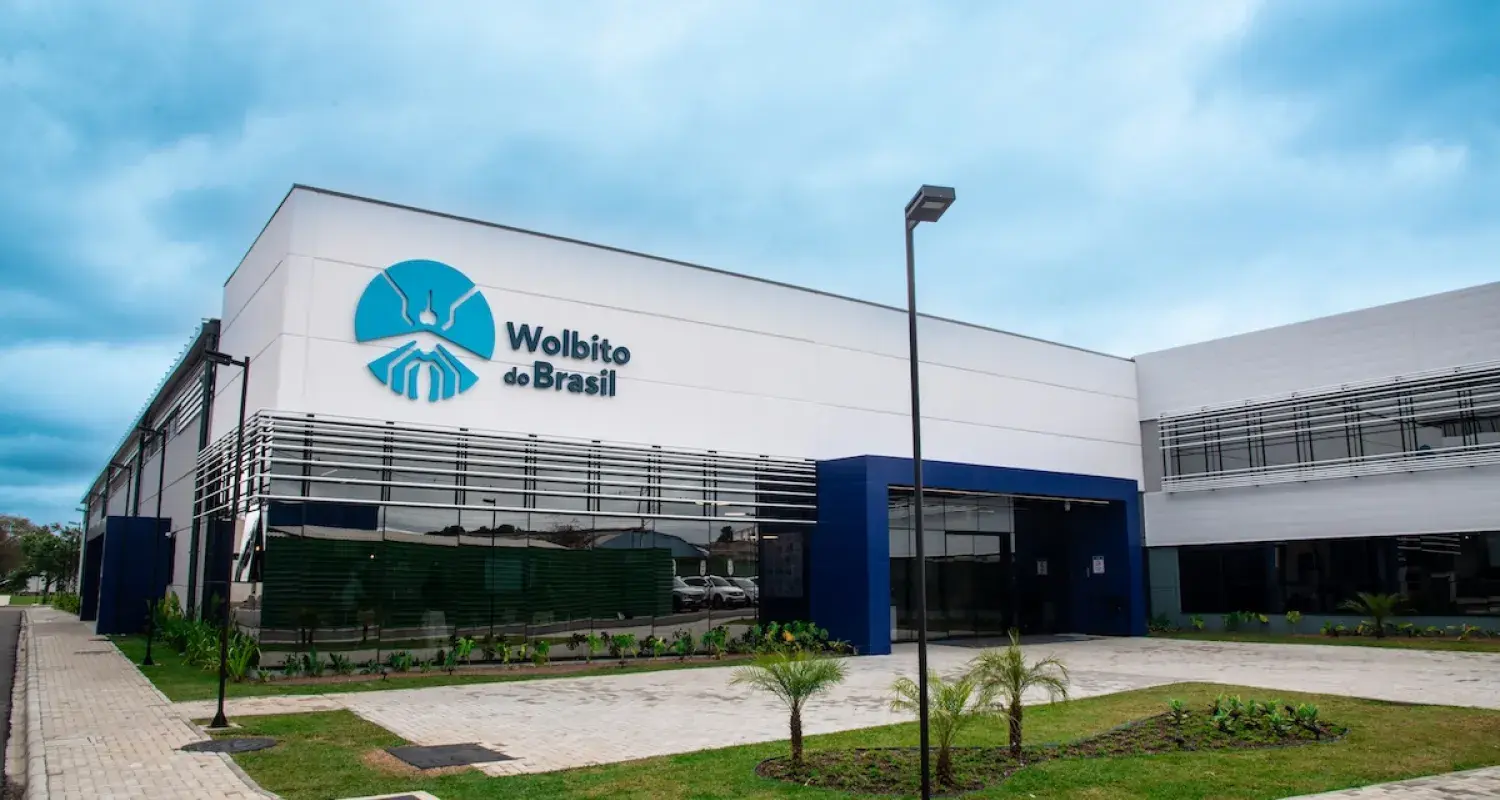
Wolbito do Brasil looks like any other office from the outside. Step beyond the meeting rooms, though, and you enter the world’s largest mosquito biofactory. In Curitiba, teams are producing Aedes aegypti mosquitoes carrying Wolbachia, a nature-based method that can help reduce dengue, Zika and chikungunya transmission. Built through a partnership between the World Mosquito Program, Fiocruz and IBMP, the facility is designed to support Brazil’s expanding national rollout and reach more communities at scale.
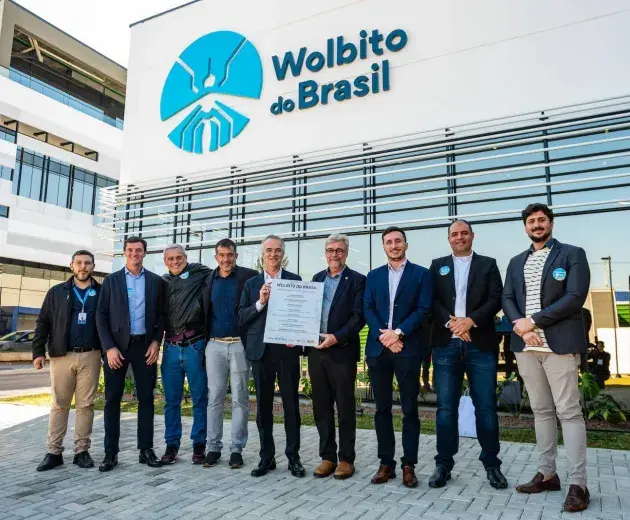
Tucked away in a corner of Curitiba’s southern industrial park, resides a cavernous building buzzing with activity and innovation. As you enter through the main doors of Wolbito do Brasil, it may appear not too dissimilar to any ordinary office. However, behind the meeting rooms and cafeteria, lies the world’s biggest mosquito biofactory, producing more than five billion Aedes aegypti mosquitoes with Wolbachia each year.
It seems very apt that in a Brazilian city known to be one of the world’s most forward-thinking in terms of sustainability and technology, Wolbito do Brasil feels very much at home in its efforts to push technological boundaries and innovation, and its goal to protect over 140 million people from mosquito-borne diseases in the next decade.
Expanding Wolbachia access across Brazil through WMP, Fiocruz and IBMP
The major facility, with more than 3,500 m² of built area, will dramatically expand access across the country to Wolbachia (known as Wolbitos in Brazil) mosquitoes, a nature-based disease control method that has significantly reduced the incidence of dengue, Zika and chikungunya, in Rio de Janeiro and Niterói since the method was first deployed in these cities in 2014. It is a result of a joint venture between the World Mosquito Program (WMP), Fiocruz, and the Institute of Molecular Biology of Paraná (IBMP).
The partnership builds on years of collaboration between WMP and Fiocruz, which has helped protect more than five million Brazilians across eight cities using WMP's innovative Wolbachia technology over the past decade.
Producing Wolbachia Aedes aegypti at scale: people, process and precision
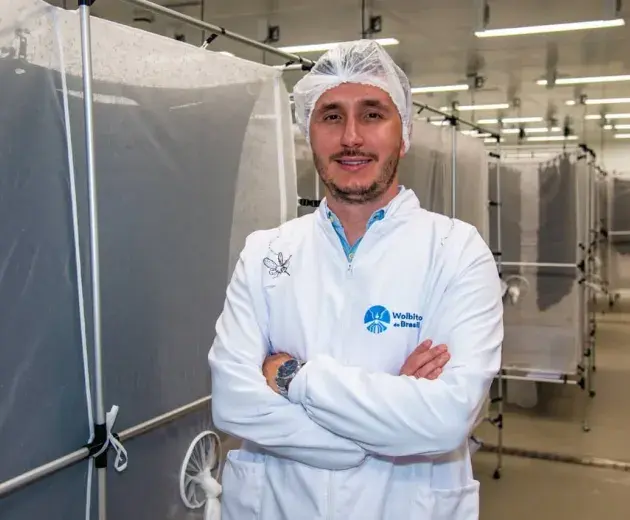
On approaching the biofactory doors, you realise it is like nothing you’ve seen before. Antonio Brandão has worked on the programme for a number of years, joining WMP Brasil in Campo Grande in 2021, before taking on the responsibility of managing a team of roughly 32 production staff at Wolbito do Brasil.
The biologist explains that his team is made up of a diverse range of skillsets and backgrounds, from fellow biologists to pharmacists, veterinarians, and biomedical professionals. In a room with more than ten million mosquitoes inside the cages, you’d be forgiven for not feeling itchy from time to time, but Antonio takes it all in his stride. He admits one of the bigger challenges at the start was getting the expertise and knowledge from people across the country that know how to rear mosquitoes.
“It’s a unique facility and a new challenge,” he says. “It’s never been done on this scale before, so we’re developing many different things to produce more than 100 million eggs per week, and to attend to roughly 14 million people a year.
“We’re currently protecting six cities in Brazil as Wolbito. Three in the south: Joinville, Blumenau and Balneário Camboriú. And three in the centre: our capital city, Brasília, Valparaíso de Goiás and Luziânia.”
Antonio believes the new partnerships in Brazil will really help build on the successes already achieved in cities like Niterói. “Last year, we had the worst dengue epidemic ever in Brazil, with more than six million cases in the country. And yet, in cities like Niterói, our first municipality to be fully protected by Wolbitos, we had a reduction of (dengue cases) 89 per cent, which I hope can be replicated elsewhere.”
Be Part of the Solution: Join Our Community
Discover how we’re transforming lives and combating mosquito-borne illnesses globally. Sign up for exclusive insights and updates delivered straight to your inbox.
Ministry of Health scale-up: plans to reach 140 million people in 40 municipalities
The facility is currently exclusively used by the Ministry of Health (MOH), which has incorporated Wolbachia as one of its national strategies for combatting mosquito-borne diseases. The growing national demand is extremely high, and the MOH hopes to reach more than 140 million people across 40 municipalities with high dengue rates, in the coming years.
In the next room, production coordinators Marlene Salazar and Luciane Martins are overseeing the egg production process. For Marlene, it has been a big change not only in the working environment but also in both languages and culture. She previously worked for WMP coordinating the biofactory team in Medellín, Colombia, and arrived in Curitiba in April.

“I worked for seven years at WMP Colombia as a biofactory coordinator,” says Marlene, who has very quickly adapted to her new home and learned Portuguese in a matter of months. “It was a big challenge both professionally and personally to move from Colombia to Brazil as it was a different language, new people to work with, and the scale of production here is so much bigger.
“There’s also a shift from the manual way of working to a much more automated process — it’s an exciting time to work here. People love their jobs as we are doing very different things to save people’s lives.”
Luciane, a pharmacist, with a Master’s in industrial biotechnology, explains just how complex the mosquito production process is, and believes it is the combination of knowledge and skills that makes the team so effective.

She emphasises: “I think the big secret of our success, as Wolbito do Brasil, is our very multidisciplinary team. Day to day, we face some challenges, because when working with biological systems, there are things we cannot predict. There is an alignment of personal purposes, a sparkle in the eye of our staff, that not only want to work to improve health but also contribute to such a grand goal as the elimination or significant reduction of these mosquito-borne diseases.”
Brazil’s dengue burden and the need for sustainable vector control
Today, Brazil has the greatest number of dengue cases in the world, with one-tenth of the global dengue burden and more than 90 per cent of its population at risk of infection. One recent study noted that over the past 25 years, nearly 18 million Brazilians have been infected with the virus, with historic highs in 2024.
Brazil’s first releases of Wolbachia mosquitoes began in September 2014 in Rio de Janeiro. WMP's Wolbachia method now protects more than five million people in eight cities including Rio de Janeiro, Londrina, Foz do Iguaçu, Campo Grande, Joinville, Belo Horizonte, and Petrolina. It is also being currently implemented in Presidente Prudente, Uberlândia, and Natal.
However, one of the biggest success stories has been in Niterói, a city of roughly 525,000 people, which became the first city fully protected by WMP’s Wolbachia method. A recently published paper in Tropical Medicine and Infectious Disease reports that Niterói saw an 89 per cent decrease in dengue cases.
The municipalities where Wolbito is currently releasing are chosen through a careful selection process by the Ministry of Health, and implementation has the strategic support of Fiocruz.
Fiocruz studies also show the economic benefits of such a cost-effective approach to disease control. It reports that for every R$1.00 invested, the government saves between R$43.45 and R$549.13 on medications, hospitalisations, and general treatments.
Why this work matters: the human impact of dengue, Zika and chikungunya
As you head through the biofactory, it’s notable all the staff are not only extremely friendly and knowledgeable but are clearly driven and motivated by helping improve the nation’s health. Mathias Gonçlaves, who is WMP’s Executive Director of Manufacturing, recently joined the organisation in May after more than 20 years in the manufacturing business at a host of different global companies. He focuses on the quality, safety and delivery of mosquito production, as well as scaling operations.

“It’s a little bit different, this is the first time I’ve worked with live organisms in manufacturing,” laughs Mathias. “But it’s really interesting to understand the different behaviours of the mosquitoes.
“The most incredible thing about the work here at Wolbito and WMP, is the proposition, no?! It is such a great proposal. I’m Brazilian, and living in this country, we know how difficult and how critical dengue is, along with Zika and chikungunya, for our population.
“These diseases are very familiar and impact many. I’ve had friends who have died from dengue. I really want to stand here in ten years time and be able to say there is much less dengue and threat from mosquito-borne diseases.”
Felipe Rocha, a production analyst, agrees wholeheartedly with Mathias’s comments. He’s witnessed dengue’s impacts first-hand in his family. “My father has had dengue and was very debilitated,” he says. “And especially my grandfather too, already in his 70s, he had a very hard time. He was hospitalised for over a week before recovering, and that was very difficult to witness.”

Felipe has been part of the country’s national efforts against diseases like dengue since joining WMP Brasil in Rio de Janeiro, at the end of 2016. He remembers starting just as the programme was finishing the pilot projects in Tubiacanga and Jurujuba, in Niterói, and notes there has been a huge increase in public awareness across the country of the programme.
“It’s really nice to see how the population has become so engaged as we’ve expanded,” says Felipe. “It’s a source of great pride both for me and my family, who have followed me in this journey as well. And for them to watch the news that this method is reaching many places throughout Brazil.”
As releases continue apace in numerous Brazilian cities, this huge facility and all the dedicated and passionate staff working at Wolbito do Brasil, will continue to bring hope to the future health of the country. As Antonio chuckles, he adds: “It’s not something I’ve ever imagined doing, rearing mosquitoes. But I’m so glad to be part of it, fighting these horrible viruses and bringing health to many places in Brazil.”
